New Jersey is the most densely populated state in the nation. We are the crossroads of the Northeast, home to the NJ Turnpike, the Garden State Parkway, I-80, and I-95. For many of us, the convenience of living near these arteries makes the commute to NYC or Philadelphia possible.
But if you live in a commuter hub towns like Woodbridge, Edison, Secaucus, Fort Lee, or Paramus you are paying a hidden “tax” on your air quality.
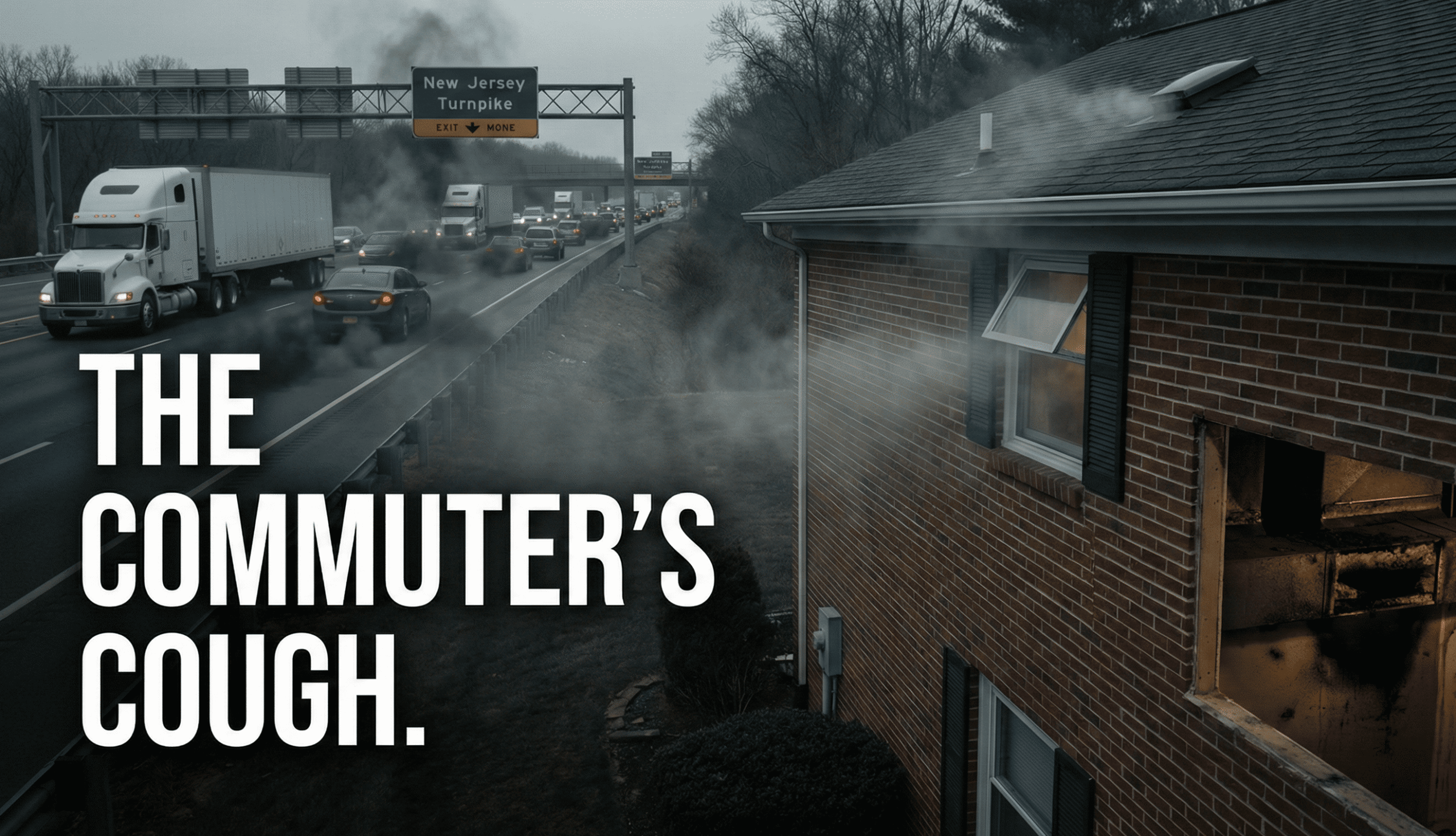
We tend to think of pollution as something “outside.” We close our windows to shut out the noise and the smell of exhaust. But science tells us that fine particulate matter from highways doesn’t respect walls or windows. It infiltrates our homes, and once inside, it settles in the one place we can’t easily reach: our air ducts.
The “Turnpike Effect”: Understanding PM 2.5
Vehicle exhaust, particularly from diesel trucks, consists of Fine Particulate Matter (PM 2.5). These particles are 30 times smaller than a human hair.
Because they are so microscopic, they don’t just fall to the ground like ordinary house dust. They float. They drift through the tiniest cracks in your window frames, under doors, and through attic vents.
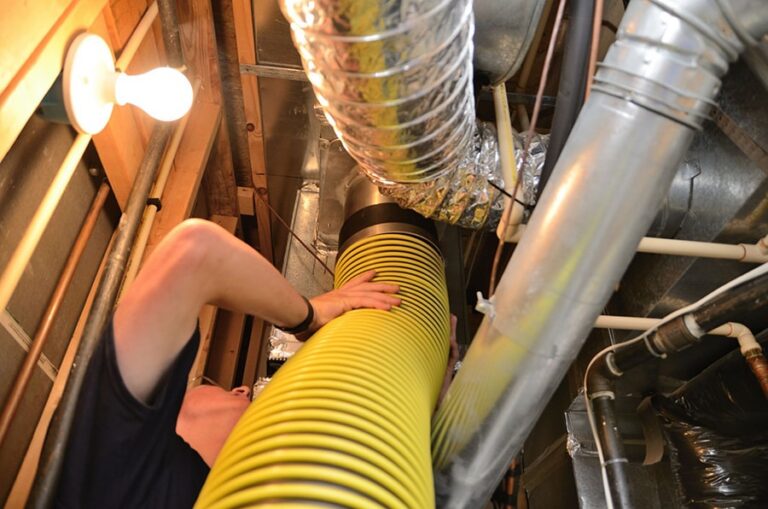
Once inside, your HVAC system acts like a giant vacuum, sucking these particles up. But unlike fluffy gray house dust, exhaust soot is greasy and sticky. It is composed of unburned hydrocarbons.
Why “Highway Dust” destroys HVAC Efficiency
When this sticky, greasy soot enters your HVAC system, it doesn’t just sit in the bottom of the duct. It coats everything.
- The Blower Fan: The blades of your fan become coated in a heavy layer of grime. This unbalances the fan and adds weight, causing the motor to work harder and overheat.
- The Coil: The A-Coil (the part that makes the air cold) has tiny fins that need airflow. Soot packs between these fins, insulating them. This means your AC has to run twice as long to cool your house, skyrocketing your PSE&G or JCP&L bill.
- The Filter: Standard fiberglass filters are designed to catch lint and hair. They are almost useless against microscopic soot, which passes right through and accumulates in your ducts.
The Health Impact: “Commuter’s Cough”
Have you ever noticed a layer of black dust on your windowsills or blinds? If it is on your windowsill, it is in your lungs.
Long-term exposure to traffic-related air pollution is linked to higher rates of asthma, reduced lung function, and cardiovascular issues. If your HVAC system is recirculating this soot 24/7, your home is not the sanctuary it should be. You are essentially breathing “highway air” while you sleep.
The NJ Air Duct Cleaning Difference
Cleaning “city soot” requires a different approach than cleaning “suburban dust.”
- Degreasing: We often use specialized degreasing agents for homes near major highways to break down the sticky bond the soot has with the metal ductwork.
- Coil Cleaning: We pay special attention to the evaporator coil, ensuring that the impacted soot is removed to restore energy efficiency.
- Filtration Upgrades: After cleaning, we can recommend and install higher-grade filtration systems (like MERV 11 or MERV 13) that are actually capable of trapping exhaust particles before they enter your system again.
Conclusion
You leave the traffic behind when you exit the highway—make sure you leave the exhaust behind, too. If you live within 5 miles of a major NJ transit corridor, your home needs a deep clean. Schedule a consultation with NJ Air Duct Cleaning and protect your family from the invisible smog of the commute.