If you have lived in New Jersey for even a single summer, you know the feeling. You step outside in July or August, and the air hits you like a wet blanket. We are famous for our “muggy” heat. While we often joke about the humidity, it poses a serious, invisible threat to the health of your home.
Most homeowners understand that humidity is bad for basements and crawlspaces. We run dehumidifiers to keep the dampness at bay. But there is one area of the home that is often ignored until it is too late: the air ducts.
Your HVAC system is the lungs of your home, breathing air in and out. When that system is forced to battle New Jersey’s 80%+ relative humidity levels, it creates the perfect storm for biological growth. This article will explain exactly why NJ homes are prone to “sweaty ducts,” the health risks involved, and how professional cleaning can reset your home’s hygiene.
The Science of Condensation: Why Ducts Sweat
To understand why mold grows in ducts, you have to understand the physics of condensation.
Your air conditioning system works by removing heat and moisture from the air. When the system is running, the metal sheet metal of your ductwork becomes extremely cold—often around 55°F to 60°F.
Now, consider where your ducts are located. In many NJ homes, ductwork runs through unconditioned spaces like attics, crawlspaces, or unfinished basements. In the height of summer, an attic in Cherry Hill or Paramus can easily reach 120°F with extremely high humidity.
When that hot, moist attic air comes into contact with the ice-cold surface of your metal ducts, condensation forms. It is the same effect as a glass of ice water “sweating” on a hot day.
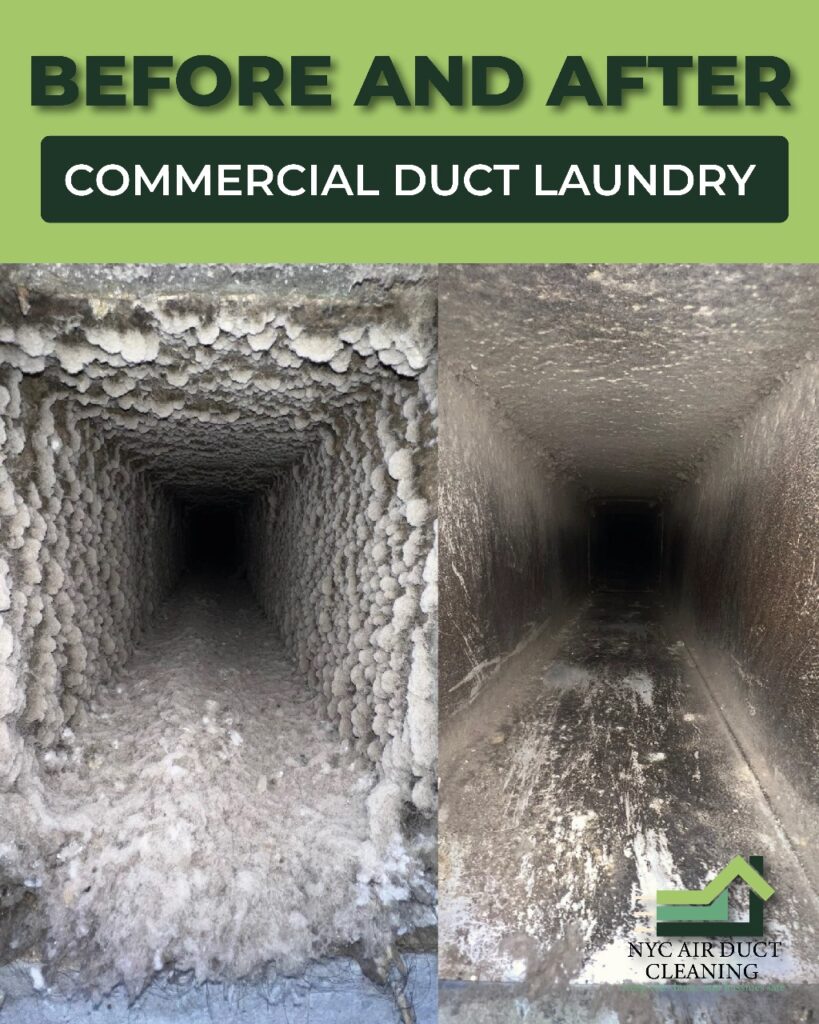
If your ducts are not perfectly sealed or insulation is lacking, this water accumulates. Dust and debris which are always present in ducts act as a sponge for this water. This mixture of organic food (dust) and water creates a petri dish for mold and mildew.
The “Garden State” Mold Problem
New Jersey’s climate is classified as “humid subtropical” for much of the state. Unlike the dry heat of the West Coast, our moisture lingers.
- The Shore Effect: Homes in Monmouth and Ocean counties face a double threat. Not only is the humidity high, but the salt air can accelerate corrosion in metal ductwork, creating pitted surfaces where mold can root more easily.
- The Inland Valley Effect: Areas like the Watchung Mountains trap humidity, creating a greenhouse effect.
3 Signs Your NJ Home Has “Sweaty Ducts”
How do you know if humidity is destroying your air quality? Look for these three signs:
1. The “Dirty Sock” Syndrome Does your home smell musty when the AC first kicks on? Many homeowners describe it as smelling like old gym socks or a damp basement. That is not “stale air”—that is the smell of active bacterial or microbial activity in the system. When the blower fan turns on, it blasts those spores into your living rooms and bedrooms.
2. Vent Spotting Go to your ceiling registers and look closely. Do you see small black specs, fuzzy gray patches, or rust forming around the metal slats? This is often mistaken for dust, but it is actually evidence of condensation and potential mold spores growing on the exit points of your system.
3. Unexplained Summer Colds If your family suffers from “summer allergies” that seem to disappear when you leave the house, you may be reacting to mold spores. Symptoms often include watery eyes, coughing, throat irritation, and headaches.
The Solution: Professional Remediation
In New Jersey, a simple “blow-and-go” duct cleaning isn’t enough. You need a service that understands moisture control.
At NJ Air Duct Cleaning, our process is designed for this climate:
- Inspection: We check the insulation around your ducts. If the insulation is wet, cleaning the inside won’t solve the problem—the insulation must be replaced.
- Sanitization: We don’t just remove the dust; we apply an EPA-registered antimicrobial sanitizer. This kills the roots of the mold and bacteria, preventing immediate regrowth.
- Source Control: We help identify why the moisture is getting in. Whether it’s a disconnected duct in the crawlspace or poor attic ventilation, we help you understand the root cause.
Conclusion Don’t let the NJ summer live inside your walls year-round. If you suspect your AC system has become a breeding ground for mold, you need to act before the spores spread further. Contact NJ Air Duct Cleaning for a humidity assessment today.